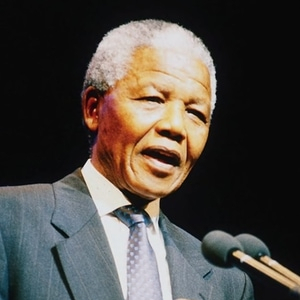
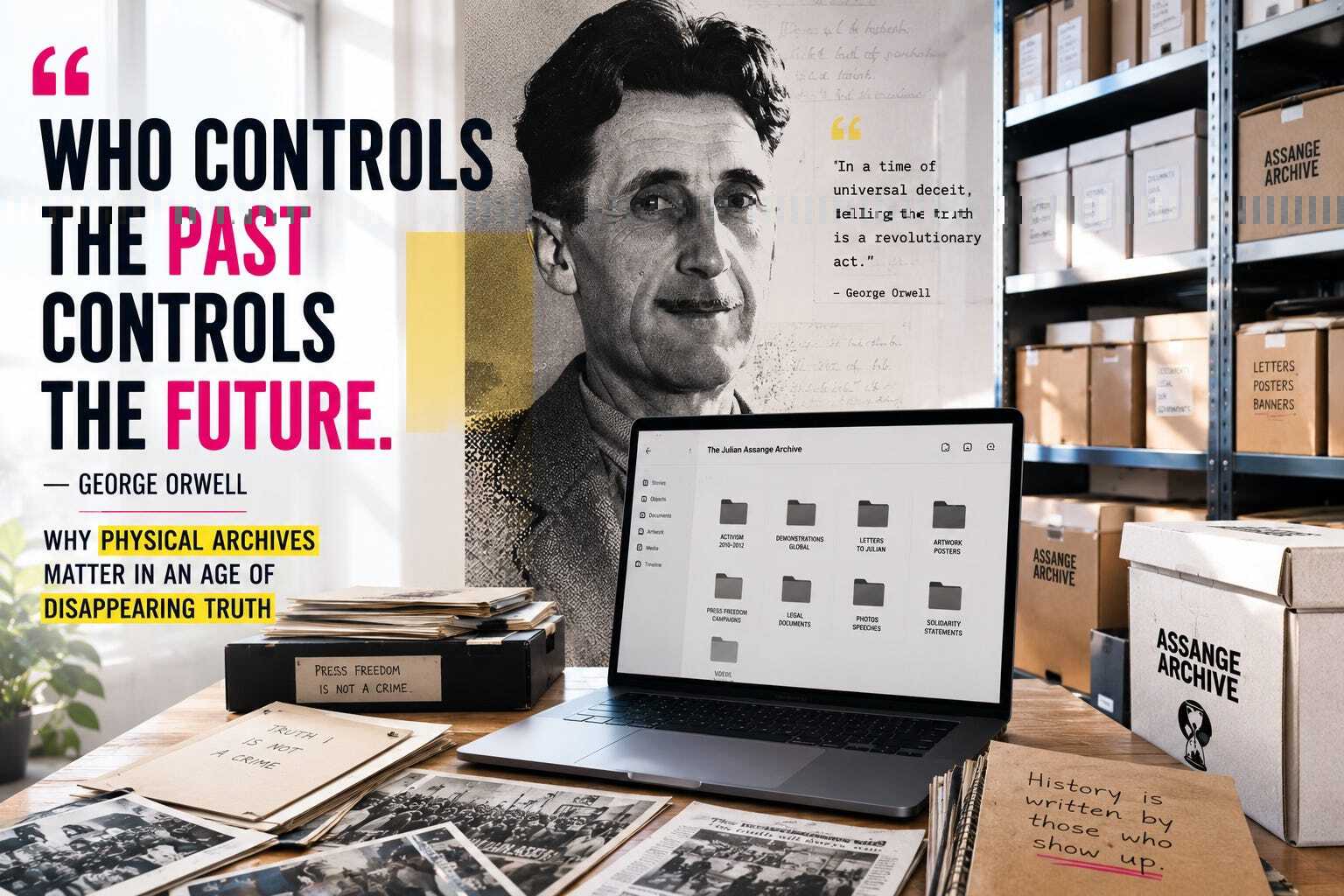
In his 2010 speech at the Oslo Freedom Forum, Julian Assange touched on something that feels even more relevant today than it did at the time. Speaking about archives, memory, and historical preservation, he referenced Orwell’s famous line:
“Who controls the past controls the future.”
Julian’s point was not nostalgic. He was not speaking about archives as static museums of history, but as something profoundly alive and political. What he was describing was the struggle over reality itself — over what survives, what disappears, and who ultimately gets to define historical truth.
And perhaps this is one of the most misunderstood aspects of our digital age.
We often speak as though information today is permanent simply because it is digital. We live surrounded by endless streams of content, constant documentation, uploads, recordings, screenshots, and archives of archives. There is a widespread assumption that because something once existed online, it will somehow remain accessible forever.
But the opposite is often true.
Digital culture creates the illusion of permanence while producing a constant condition of disappearance. Accounts vanish. Videos disappear. Links break. Platforms collapse. Search visibility changes. Context dissolves beneath the endless acceleration of new information. Material is buried not only through censorship, but through overload, fragmentation, and the speed at which everything becomes replaceable.
And this changes the nature of historical memory itself.